Description
see all eventsSilverada
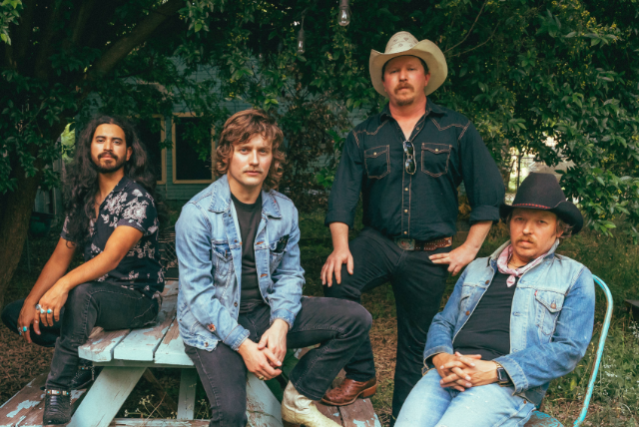
Silverada
Emily Nenni Please note - there is a delivery delay set for 2 weeks prior to show. Mike Harmeier was still in his early 20s when he formed the band now known as Silverada. From the start, they were the definition of a workingman's country band, cutting their teeth with five-hour sets on Austin's dancehall circuit before spreading their music to the rest of America.
By the early 2020s, they'd become global ambassadors of homegrown Texas music, flying their flag everywhere from Abbey Road Studios (where they recorded 2019's Cheap Silver & Solid Country Gold with help from the London Symphony Orchestra) to the Grand Ole Opry. The band's newest self-titled album, 'Silverada', marks a new chapter in the band's history.
It's not just the title of the boldest release of the group's critically-acclaimed career; it's also the name of the reinvigorated band itself. "Back in the day, all we wanted to do was play the Broken Spoke," says Harmeier, nodding to the hometown honky-tonk in Austin, TX, where Silverada began sowing the seeds for a sound that mixed timeless twang with modern-day dynamics. "We had different aspirations back then.
We were still figuring out what kind of band we were gonna be, and that took a lot of time and a lot of records." A lot of records, indeed.
Silverada marks the group's ninth release, and it balances the strengths they've accumulated along the way - sharp, detailed songwriting that bounces between autobiographical sketches and character studies; gorgeous swells of pedal steel that drift through the songs like weather; a rhythm section capable of country shuffles, hard-charging rock & roll tempos, and everything in between - with a willingness to break old rules and open new doors.
"Radio Wave" is a roots-rock anthem for the highway and the heartland, peppered with Springsteen-worthy hooks and War On Drugs-inspired atmospherics. "Eagle Rare" launches the band into outer space during its explosive middle section, which the band improvised in the recording studio.
"Stay By My Side" showcases Silverada's road-warrior credentials - the band recorded the track live during a tour across the American Southeast, capturing it in a single take at Capricorn Sound Studios in Macon, Georgia - while "Wallflower" blends the organic with the otherworldly, finding room for harmonized guitar solos, driving disco beats, and 808 percussion.
"Going into the studio, everybody in the band felt inspired to do something bigger than what they'd done before," Harmeier explains. "We all knew we were at a precipice, and we wanted to jump.
I brought in some songs that were metaphorical and not always straightforward, and that showed the guys that I wanted to take this music somewhere new... so they threw their own rule books out the window, too." Harmeier wrote the bulk of Silverada in his backyard studio, surrounded by dozens of books he'd picked up at a local Goodwill.
"We'd been on tour for so long, playing the same set for almost two years, and I wanted to write something that was a departure," he remembers. Jeff Tweedy's books on songwriting were a big help, but Harmeier pushed himself to get weird, too, finding inspiration in everything from astronomy texts to sci-ti novels.
"I would read some, work a little bit, read some more, and work a little more," he says of the creative process. "I spent a full month in that studio, going there every night, making word ladders and highlighting lines and learning to free write." Recorded at Yellow Dog Studios with longtime producer/collaborator Adam Odor, Silverada propels the band forward without losing sight of their roots.
"Stubborn Son" - a loving, unsparing sketch of the family patriarch who set Harmeier's creativity in motion - unfolds like a close cousin to Steak Night at the Prairie Rose's title track, laced with fiddle solos from longtime George Strait collaborator Gene Elders.
"Doing It Right" channels the same throwback, slow-dance ambiance that informed 2019's "You Look Good in Neon." "Load Out," which chronicles the grind of blue-collar jobs both on and off the road, could've found a home on 2021's One To Grow On. There's a smart sense of history here - a celebration not only of where the band is headed, where they've been, too.
Even so, Silverada doesn't spend much time looking in the rearview mirror. Instead, it keeps its gaze focused on the road ahead. This is a snapshot of a band in motion, chasing down the next horizon, writing the soundtrack to some new discovery. It's the sound of alchemy, of some new metal being forged. And like silver itself, Silverada shines brightly.
"We spent the first part of our career figuring out who we are and what we're good at," says Harmeier. "Now we want to evolve not only the sound of the band, but the dynamic of the live show, too. Silverada is us setting the stage for the next leg of the journey." Emily Nenni has a confession: she didn’t always plan on being a performing artist. “I thought I was just going to be a songwriter,” she admits.
Clearly, life had something else in store. The singer and guitarist has emerged as one of the freshest and most electrifying voices in Nashville, with a sound rooted in classic honky-tonk and spiked with serious country, soul and rock ‘n’ roll fire, and sweet-and-sassy lyrics that chronicle hard living, hot nights, heartbreak and other universal truths about the human condition.
Over the past several years she’s enraptured audiences across Music City with sizzling sets in smoky bars and clubs, honing her command of the stage, perfecting her skills as a band leader and sharpening an already astute world view, all of which are on full display on her newest studio album, Drive & Cry. The record is a marked departure from her previous full-length, 2022’s celebrated On the Ranch.
Whereas that effort saw Nenni uproot herself to lend a hand — and write — while assisting at a ranch in southern Colorado, Drive & Crydrops the listener smack in the middle of her boisterous and bustling Nashville world. The album kicks off with “Get to Know Ya,” a honky-tonk rave-up that celebrates the end of the work day and the beginning of a music-filled, come-what-may night.
Nenni busts out her biggest hoops, jumps into the jeans she can “really only stand up in,” and heads to the local bar. “Play ‘til the sun’ll come / when the daylight’s done,” she sings as the instrumental accompaniment races in step behind her.
From there, Nenni leads into “Greatest Hits,” a pedal-steel-inflected Dolly Parton–style number in which she tips her hat to underground honky-tonk venue Santa’s Pub, a dive bar squeezed inside a double-wide trailer that has become her home-away-from-home in Nashville. “When I first came to town, I was 21 and singing at clubs with folks who were twice my age,” Nenni recalls of moving to Music City from her native California. “Then a buddy of mine said, ‘There's a place where people are making this music that are actually your age, and where you'd really fit in.’ And that was Santa’s Pub.
It’s where I learned that music doesn't have to be perfect — everybody is just having fun and there’s no judgment.
You can show up however you're feeling that night, have a good time and be surrounded by friends.” A stellar cast of those friends stepped up to assist Nenni on Drive & Cry, beginning with producer John James Tourville of New West labelmates the Deslondes. “He brought in half the musicians and I brought in half,” Nenni says. “And he gave me so much space to make the record that I wanted to make.” It’s a record that is her most personal to date.
Save for an album-closing cover of Terry Allen’s classic “Amarillo Highway” (a staple of her Sunday-night sets at Santa’s), Nenni penned the remainder of the dozen tracks entirely on her own. “It’s the first time I’ve done that,” she says. “I had a few weeks alone at my house in Nashville, and I just sat with all my thoughts and feelings from the last couple years and put it all down.
So this is an album that’s truly ‘me.’” The results put the full range of Nenni’s singular musical voice on display, from the soaring “Changes,” influenced by her love of Sixties girl groups, to the swampy, strutting empowerment anthem “I Don’t Have to Like You,” in which she declares, “I’m a grown-ass woman and I don’t trust a word you coo.” There’s also the Tina Turner homage “I Don’t Need You” (“Got my own boots to fill and you know I will,” Nenni assures), the wistful, late-night honky-tonk ode “We Sure Could Two Step,” and the playful title track, in which, over a tight country-funk groove, Nenni jokes, “Don’t you worry ‘bout me / I’m gonna have a bawl.” It's a lighthearted lyric, but one that is, like everything on the album, true to Nenni’s life. “I do actually cry a fair bit, and I love to do it while I’m driving,” she admits.
Nenni will have plenty of opportunities for that in the near future, as she plans to take Drive & Cry on tour, far and wide. “I love to be on the road,” she says. “I love to be with my buds, I love to play shows, and I love to make people happy and make people cry with my music. That’s what truly makes me happy, too.” Nenni laughs. “So I maybe never thought I’d be a performer, but I sure am glad that I am.”